Battle royale games strip competitive shooters down to a single, unforgiving question: can you be the last one standing? Every match starts the same way. You drop into a large map alongside dozens of other players, scramble for weapons and resources, and fight to survive as the playable area shrinks around you. There are no respawns, no second rounds, and no safety nets. When you die, you are out.
That finality is what defines the genre. Unlike arena shooters where rounds reset every few minutes or team-based games where individual deaths are absorbed by the squad, battle royales attach weight to every single encounter. Winning a fight means surviving to face the next one. Losing means watching from the sidelines. The result is a style of gameplay where positioning, timing, resource management, and decision-making matter as much as raw mechanical skill.
This guide compares the best battle royale games available in 2026. Whether you want fast-paced aggression, tactical realism, creative building mechanics, or large-scale vehicular warfare, this page breaks down every major title across accessibility, pacing, solo and squad play, and competitive depth so you can find the battle royale that fits how you want to play.
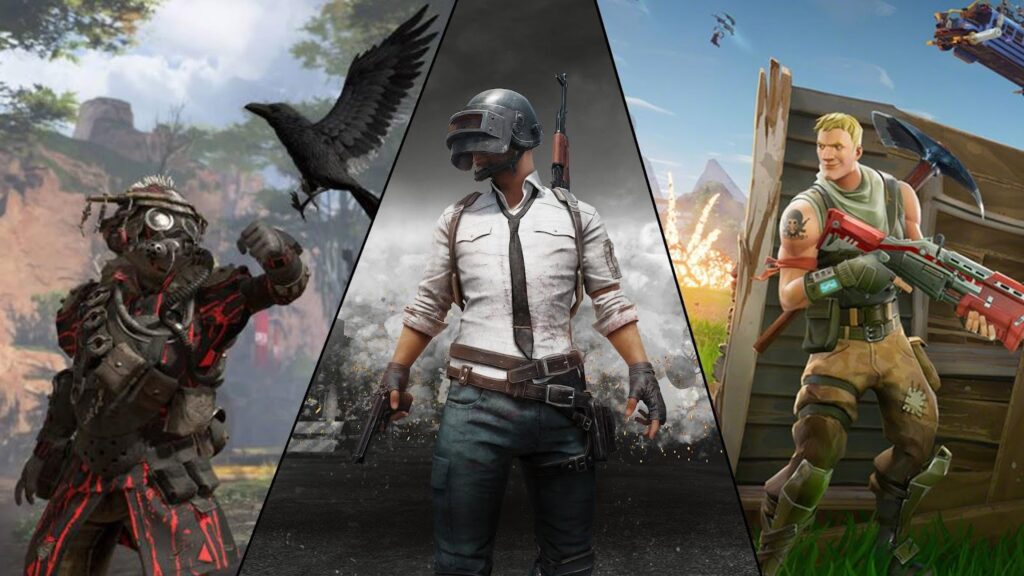
Quick Comparison: Best Battle Royale Games
Use this table as a starting point to narrow down which games match your preferences. Each title is covered in detail further in the article, but this overview gives you an immediate sense of pacing, team structure, and platform availability.
| Game | Core Focus | Solo / Squad Balance | Pacing | Platforms |
|---|---|---|---|---|
| Fortnite | Creative building + shooting, seasonal events | Strong solo and squad modes | Fast | PC, PS4, PS5, Xbox One, Xbox Series X|S, Switch, Android, iOS |
| Call of Duty: Warzone | Aggressive FPS combat, loadout customization | Strong in both, squad-favored | Fast | PC, PS4, PS5, Xbox One, Xbox Series X|S |
| Apex Legends | Movement-driven hero shooter | Squad-focused (trios), solo limited | Fast | PC, PS4, PS5, Xbox One, Xbox Series X|S, Switch |
| PUBG: Battlegrounds | Realistic gunplay, tactical positioning | Strong solo, duo, and squad | Slow-Medium | PC, PS5, Xbox Series X|S |
| Grey Zone Warfare | Tactical realism, open-world PvPvE | Solo and squad supported | Slow | PC (Early Access) |
| Battlefield REDSEC | Large-scale vehicular battle royale | Squad-focused (duos and quads) | Medium | PC, PS5, Xbox Series X|S |
What Is A Battle Royale Game?
A battle royale game is a multiplayer last-player-standing competition where a large number of players, typically between 60 and 150, drop into a shared map, scavenge for weapons and equipment, and fight until one player or team remains. The defining mechanic is a shrinking play area that forces survivors into increasingly tight spaces, guaranteeing confrontation and preventing indefinite camping.
Battle royales differ from traditional shooters in one fundamental way: permanence within the match. In arena shooters, death is temporary. You respawn and continue. In battle royales, death ends your participation. That single-life structure transforms every engagement into a high-stakes decision. Do you take the fight or reposition? Do you push for better loot or play safe with what you have? Do you rotate early or hold your position and risk getting caught in the zone?
These decisions, repeated across a 15 to 30 minute match, are what make battle royales feel distinct. The genre is not defined by any single mechanic but by the combination of scarcity, uncertainty, and finality that creates tension from the first drop to the final circle.
The Core Battle Royale Loop Explained
Every battle royale match follows the same structural arc, though pacing, loot systems, and map design vary between games. A standard match plays out in these stages:
- 1) The drop – All players deploy onto a large map simultaneously, choosing where to land. Landing in high-traffic areas means immediate combat and better loot. Landing in quieter zones means safer looting but weaker equipment. This first decision sets the tone for the entire match.
- 2) Early looting and positioning – After landing, players scavenge for weapons, armor, healing items, and utility. The first 2 to 5 minutes are defined by resource acquisition. Players who land in contested areas must fight immediately. Players who land safely focus on building a loadout before the zone closes.
- 3) Mid-game rotations – The shrinking play area forces movement. Players must rotate toward the safe zone while managing exposure, avoiding other players, and deciding whether to engage or evade. Mid-game is where positioning and map knowledge become critical.
- 4) Late-game circle pressure – As the safe zone tightens, remaining players are compressed into a small area. Resources are limited, angles are contested, and every movement risks exposure. The pace accelerates dramatically.
- 5) Final encounters – The last few players or teams fight in a confined space where avoidance is no longer possible. Mechanical skill, remaining resources, and positioning determine the winner. The last player or team standing wins.
Survival is the primary win condition, not kill count. A player who avoids every fight and outlasts 99 opponents has won just as decisively as someone who eliminates 15 players on the way to victory. Most games track kills as a secondary metric, but the only thing that determines a win is being the last one alive.
Death within a match is permanent in most battle royales. Some games offer limited revival mechanics, such as teammate respawns or second-chance systems, but these are exceptions rather than the default. The threat of permanent elimination is what gives every engagement its weight.
Looting, Randomization, and Match Variety

Battle royales use randomized loot distribution to ensure that no two matches play identically. Weapons, armor, attachments, and consumables spawn in fixed locations but with random quality and availability. A building that contained a high-tier weapon in one match might contain nothing useful in the next.
This randomization serves several design purposes:
- It prevents optimization – Players cannot memorize a perfect route and execute it every game. Adaptation is required every match.
- It creates asymmetry – Not all players are equally equipped at any point during the match. This asymmetry forces players to make decisions based on what they have, not what they want.
- It increases replayability – Each match presents a different combination of starting location, available equipment, zone placement, and opponent distribution. This variance keeps games feeling fresh over hundreds of hours.
- It rewards flexibility – Players who can perform with any weapon or loadout gain a significant advantage over players who depend on specific equipment to succeed.
Zone placement is also randomized in most battle royales. The safe area shifts unpredictably between matches, meaning the center of action changes every game. This prevents the development of dominant positions and forces all players to adapt their strategy based on where the circle lands.
Solo, Duo, and Squad Dynamics
Battle royales typically offer multiple team formats, and the choice between solo, duo, and squad play fundamentally changes how the game feels.
| Aspect | Solo | Duo | Squad (3-4 players) |
|---|---|---|---|
| Information | Only your own eyes and ears | Two perspectives, limited callouts | Full team coverage, coordinated information |
| Engagement style | One-on-one, immediate resolution | Pairs trading shots, flanking possible | Team fights with crossfires, focus fire, and trades |
| Revival | None (death is final) | Partner can revive | Multiple teammates can revive |
| Pressure | Maximum – every decision is yours alone | High – shared responsibility but limited safety | Distributed – roles and responsibilities are shared |
| Ideal for | Self-reliant players who want pure 1v1 outcomes | Players who want teamwork without heavy coordination | Players who enjoy communication and team synergy |
Solo play delivers the purest battle royale experience. There are no teammates to rely on, no callouts to lean on, and no one to revive you. Every kill, every rotation, and every win is entirely your own. The pressure is highest, but so is the satisfaction of winning.Squad play shifts the game toward coordination. Fights become team engagements where focus fire, trading, and ability synergy determine outcomes. Communication replaces individual awareness as the primary advantage. Neither format is objectively superior. They appeal to different motivations and reward different skills.
What Makes a Great Battle Royale?
The battle royale genre has enough titles that quality varies significantly. Understanding what separates a great battle royale from a forgettable one helps you evaluate games based on design rather than hype. The best battle royales share a few core strengths:
- Map design and flow – A strong map creates natural points of interest, varied terrain, and meaningful rotation decisions. Poor maps feel empty between engagements or force players into the same chokepoints every game.
- Gunplay and movement – The core combat loop must feel responsive and rewarding. Whether a game prioritizes realism or arcade-style speed, weapons should feel distinct and movement should be fluid.
- Circle pressure and pacing – The shrinking zone should create urgency without feeling arbitrary. The best implementations accelerate tension naturally rather than punishing players for being in the wrong place at the wrong time.
- Replayability and meta longevity – Games need variance between matches and enough depth to sustain interest over months and years. Regular updates, weapon balancing, and new content all contribute.
- Accessibility versus skill ceiling – The best battle royales are easy to understand but difficult to master. A new player should survive their first few matches, while experienced players should still be learning and improving after hundreds of hours.
The Best Battle Royale Games Overall
Each of these games represents a different interpretation of the battle royale formula. Some prioritize speed and mechanical intensity. Others reward patience, positioning, and tactical awareness. Some are designed for squads. Others deliver their best experience solo. The right choice depends entirely on what you value in competitive gameplay, not on which title has the largest player count or the most content updates.
Each game below is evaluated on what it prioritizes, how it feels moment to moment, who it suits best, and where it may frustrate certain players.
Fortnite
Fortnite is the most widely played battle royale in the world and the game that brought the genre into mainstream culture. Developed by Epic Games, Fortnite combines fast-paced third-person shooting with a building system that adds a layer of mechanical depth not found in any other battle royale.
In Build mode, players harvest materials and construct walls, ramps, and platforms during combat. This transforms fights from pure aim duels into rapid vertical engagements where construction speed, edit plays, and piece control determine outcomes. The skill ceiling is enormous. Top-level Fortnite players execute building sequences faster than most players can process, making competitive Fortnite one of the most mechanically demanding experiences in the genre.
Zero Build mode strips out construction entirely, creating a more traditional battle royale where gunplay, positioning, and natural cover drive engagements. This mode has significantly broadened Fortnite’s audience by removing the building learning curve while maintaining the game’s fast pacing, vibrant map design, and frequent content updates.
Fortnite’s seasonal model keeps the game in constant evolution. Maps change, new weapons rotate in and out, and live events create shared moments that no other battle royale replicates at scale. Storm pressure, mobility items like launch pads and shockwave grenades, and an aggressive circle keep players moving and prevent passive play. Matches are fast, engagements are frequent, and downtime between fights is minimal.
Best for: Players who want a fast, creative, constantly evolving battle royale. Zero Build mode is excellent for traditional BR fans. Build mode rewards mechanical investment at the highest level.
Players interested in optimising their experience can explore Elocarry’s Fortnite Hacks to better manage high-risk encounters and improve extraction outcomes.

Call of Duty: Warzone
Call of Duty: Warzone is a battle royale built for aggression. Developed by Activision, Warzone takes the gunplay and movement systems from Call of Duty’s multiplayer and drops them into a large-scale last-team-standing format. The result is a battle royale that feels faster and more combat-dense than almost any competitor.
Warzone’s defining feature is the loadout system. Rather than relying entirely on ground loot, players earn in-match currency to purchase custom loadout drops containing their own weapons, attachments, and perks. This reduces the randomness of looting and shifts the competitive emphasis toward gunfight skill and map control. Once you have your loadout, you are playing with the equipment you chose, not whatever you found on the floor.
The Gulag system gives eliminated players a second chance. After your first death, you enter a 1v1 fight. Win, and you redeploy. Lose, and your squad can still buy you back using in-match currency. This reduces the frustration of early eliminations and keeps players engaged longer than traditional one-life formats.
Contracts, UAVs, and bounty objectives spread across the map compress downtime by giving players constant reasons to move and engage. Warzone does not reward passive play. Sitting still means falling behind in cash, loadout timing, and information. The game actively pushes players toward confrontation.
Best for: FPS players who want constant action, familiar Call of Duty gunplay, and reduced loot randomness. Strong for squads who communicate well.
Players interested in optimising their experience can explore Elocarry’s Warzone hacks to maintain control during high-intensity raids and improve extraction consistency.

Apex Legends
Apex Legends is a movement-driven, hero-based battle royale with one of the highest skill ceilings in the genre. Developed by Respawn Entertainment, Apex combines fluid traversal mechanics with legend abilities and squad-based teamplay to create a battle royale where how you move matters as much as how you shoot.
Every player selects a legend with unique tactical, passive, and ultimate abilities. These abilities shape team composition and strategy. A squad running Bangalore, Bloodhound, and Gibraltar plays fundamentally differently from one running Wraith, Pathfinder, and Octane. Ability synergy and team coordination are not optional extras. They are core to winning engagements.
Apex’s movement system is its mechanical backbone. Sliding, climbing, zip-lining, and momentum-based repositioning allow skilled players to traverse the map at speeds that transform firefights into fluid, multi-angle engagements. Disengaging from a bad fight, re-positioning mid-combat, and using verticality to create advantages are all central to high-level play.
Third-partying is a defining dynamic. Gunfights attract nearby squads, and the audio design ensures that combat is heard from considerable distance. Winning a fight and immediately being engaged by a fresh squad is common, which means finishing fights quickly and managing health resources between engagements is essential.
Best for: Players who value mechanical mastery, advanced movement, and squad coordination. The highest skill ceiling among accessible battle royales.
Players interested in optimising their experience can explore Elocarry’s Apex hacks to maintain control during high-intensity raids and improve extraction consistency.

PUBG: Battlegrounds
PUBG: Battlegrounds is the game that established the modern battle royale genre and remains the most grounded, realism-focused title in the space. Developed by KRAFTON, PUBG emphasizes traditional gunplay, positioning, and survival instincts over abilities, building mechanics, or respawn systems.
PUBG’s gunplay is built on realistic ballistics. Bullets have travel time, bullet drop over distance, and weapon-specific recoil patterns that require practice to control. There are no hit-scan weapons and no aim assist on PC. Every kill at range is earned through understanding projectile behavior, leading targets, and compensating for distance. This creates a shooting experience that feels grounded and rewarding in a way that faster-paced competitors do not replicate.
Pacing in PUBG is deliberately slower than other battle royales. Matches on large maps like Erangel and Miramar involve extended periods of scouting, rotating, and positioning before engagements begin. Sound discipline matters. Vehicle usage broadcasts your position. Running across open ground is a calculated risk. PUBG punishes impatience and rewards players who understand when to move and when to hold.
The blue zone drives the match forward, but its relatively slow early shrinks allow for strategic rotation planning rather than panicked sprinting. Late-game circles become intense as remaining players contest limited cover in tight spaces, and the final moments of a PUBG match deliver tension that few other battle royales match.
Best for: Players who want realistic gunplay, methodical pacing, and a battle royale that rewards tactical awareness over mechanical speed. Strong across solo, duo, and squad modes.
Players interested in optimising their experience can explore Elocarry’s PUBG hacks to maintain control during high-intensity raids and improve extraction consistency.

Grey Zone Warfare
Grey Zone Warfare is not a traditional battle royale, but it occupies a space that appeals to battle royale players looking for something with more persistence and less randomness. Developed by MADFINGER Games, Grey Zone Warfare is a tactical open-world shooter with PvPvE mechanics, faction-based objectives, and a persistent world where progress carries between sessions.
There is no shrinking circle or last-player-standing format. Instead, players deploy into a large open map, complete missions, engage AI enemies, and encounter other players organically through shared objectives and contested zones. The tension comes from exposure, distance, and the knowledge that losing a fight costs real progress, similar to the stakes battle royale players experience in final circles but sustained across longer, more methodical sessions.
The ballistics model is realistic, with bullet travel time, penetration values, and damage modeling that punishes poor positioning. Engagements happen at range, and sound discipline, terrain awareness, and route planning are as important as shooting ability. This appeals directly to players who enjoy PUBG’s pacing and realism but want a deeper, less randomized progression system.
Grey Zone Warfare is currently in Early Access on PC and is evolving rapidly. It is best suited for players who have explored traditional battle royales and want a more persistent, tactical experience without the shrinking-circle pressure that defines the genre.
Best for: Battle royale veterans who want tactical realism, persistent progression, and PvPvE tension without randomized match formats.
Players interested in optimising their experience can explore Elocarry’s Gray Zone hacks to maintain control during high-intensity raids and improve extraction consistency.

Battlefield REDSEC
Battlefield REDSEC is a free-to-play battle royale that brings Battlefield’s signature large-scale warfare into the last-team-standing format. Developed by DICE and published by EA, REDSEC launched in October 2025 as a standalone companion to Battlefield 6, delivering 100-player battle royale matches with vehicles, environmental destruction, and squad-based class mechanics.
REDSEC’s defining feature is scale. Matches take place on large maps where helicopters, tanks, and transport vehicles are available through keycard pickups. Environmental destruction means that buildings you are using as cover can collapse, walls can be blown open, and sight lines change throughout the match. This adds a layer of unpredictability that static-map battle royales do not provide.
Squad play is central. REDSEC supports duos and quads, with class-based roles that encourage team composition planning. Revive mechanics, shared resources, and coordinated vehicle usage reward squads that communicate. Individual dominance is possible but less impactful than in smaller-scale battle royales because the map size and player count distribute encounters more evenly.
Beyond battle royale, REDSEC includes Gauntlet, a competitive 32-player elimination mode with shorter rounds and objective-based gameplay, and Portal, a custom game creation tool that lets players modify rules, weapons, and settings. This variety gives REDSEC more longevity than a single-mode battle royale.
Best for: Battlefield fans who want large-scale vehicular battle royale with destruction mechanics. Strong for organized squads who enjoy tactical coordination.
Players interested in optimising their experience can explore Elocarry’s RedSec hacks to maintain control during high-intensity raids and improve extraction consistency.

Best Battle Royale Games for Beginners
Starting with the right battle royale makes the difference between engaging with the genre long-term and bouncing off after a few frustrating matches. Beginner-friendly does not mean shallow or lacking depth. It means the game provides systems that help new players survive long enough to learn, without removing the challenge that makes battle royales compelling.
The most approachable battle royales share a few key traits:
- Clear visual and audio feedback – You can tell where damage is coming from, how much health you have, and what your weapons do without consulting external guides.
- Forgiving death mechanics – Revival systems, second-chance mechanics like Warzone’s Gulag, or respawn beacons in Apex reduce the frustration of dying early before you understand the game.
- Intuitive movement – Games where traversal feels natural and predictable let new players focus on combat rather than fighting the controls.
- Tutorials and training modes – Dedicated practice areas where you can learn weapons, movement, and mechanics without match pressure.
Based on these criteria, the strongest starting points for new battle royale players are:
| Game | Why It Works for Beginners |
|---|---|
| Fortnite (Zero Build) | Clean UI, intuitive movement, skill-based matchmaking places new players against similar opponents, frequent shield and healing availability |
| Call of Duty: Warzone | Familiar FPS controls, Gulag second-chance system, loadout drops reduce bad loot RNG, team buyback system |
| Battlefield REDSEC | Squad-based play distributes pressure, vehicle options reduce infantry-only skill requirements, larger maps reduce early-game chaos |
| Apex Legends | Strong tutorial, respawn beacons, ping system eliminates need for voice communication, squad format shares responsibility |
All of these games also offer high skill ceilings at competitive levels, meaning you will not outgrow them quickly. Starting with an accessible title and building skill over time is a more sustainable path than jumping into the most punishing option first.
Battle Royale Games Ranked by Difficulty
Difficulty in battle royales is shaped by game systems, not just reflexes. A player with strong aim can still struggle in a game with complex movement mechanics, fast time-to-kill, or limited information feedback. Understanding where each game sits on the difficulty spectrum helps you choose a title that matches your experience level and tolerance for punishment.
| Game | Difficulty Tier | Why This Difficulty |
|---|---|---|
| Fortnite (Build Mode) | Hard | Building mechanics add enormous mechanical complexity on top of shooting; competitive lobbies are extremely demanding |
| Apex Legends | Hard | Advanced movement system, legend ability management, third-party pressure, squad coordination requirements |
| Grey Zone Warfare | Hard | Realistic ballistics, large open maps with long sightlines, no hand-holding, steep knowledge requirements |
| PUBG: Battlegrounds | Moderate-Hard | Realistic recoil and bullet physics, slow pacing punishes poor positioning, no second-chance mechanics |
| Call of Duty: Warzone | Moderate | Fast time-to-kill, familiar FPS mechanics, Gulag and buyback soften death, loadout system reduces loot pressure |
| Battlefield REDSEC | Moderate | Squad-based play distributes responsibility, vehicles provide alternatives to gunplay, larger maps reduce constant engagements |
| Fortnite (Zero Build) | Accessible | No building complexity, strong SBMM, intuitive controls, abundant healing, and clear visual feedback |
Higher difficulty does not indicate a better game. Fortnite’s Build mode and Apex Legends offer tremendous depth for players willing to invest time in mastery, but Warzone and Fortnite Zero Build deliver equally valid competitive experiences with faster onboarding. Choose based on what kind of challenge you enjoy, not what is perceived as the most hardcore option.
Which Battle Royale Should You Play?
The right battle royale depends on what you want from the experience, not which game has the largest player count or the most active esports scene.
Start by considering whether you prefer playing solo or with a squad. Solo play in battle royales is a fundamentally different experience, defined by self-reliance, individual decision-making, and pure 1v1 outcomes. Squad play shifts the focus toward communication, coordinated pushes, and shared survival. Games like PUBG and Fortnite support both formats well, while Apex Legends is designed primarily around trios and loses some of its identity in solo play.
Next, consider your pacing preference. Warzone and Fortnite deliver fast matches with constant engagements and minimal downtime. PUBG and Grey Zone Warfare are slower, more deliberate, and reward patience and positioning over speed. Neither approach is better. They serve different motivations.
Think about your tolerance for learning curves. Apex Legends and Fortnite Build mode demand significant time investment before they become rewarding at higher levels. Warzone and Fortnite Zero Build are playable almost immediately. If your available gaming time is limited, starting with a more accessible title prevents frustration and lets you enjoy matches sooner.
Finally, prioritize enjoyment over perception. Playing the hardest or most competitive battle royale does not make the experience better if you are not having fun. The genre works because the last-player-standing format creates memorable, high-pressure moments. That happens at every difficulty level, from Fortnite Zero Build’s accessible chaos to PUBG’s methodical final circles. Choose the game that matches how you actually want to spend your time, and the format will deliver the tension the genre is known for.
Best Battle Royale Games: FAQs
What game started the battle royale genre?
The genre traces its origins to a 2013 ARMA 2 mod created by Brendan “PlayerUnknown” Greene, inspired by the 2000 Japanese film Battle Royale. Greene later developed the standalone game PUBG: Battlegrounds, which launched in early access in 2017 and established the template that every modern battle royale follows: large maps, looting, shrinking zones, and last-player-standing elimination.
Are battle royale games the same as survival shooters?
No. Survival shooters like DayZ or Rust focus on long-term resource management, base building, and persistent worlds. Battle royales are match-based with defined start and end points, shrinking play areas, and no progression between matches beyond cosmetics or account level. The overlap is in scavenging and combat, but the structures are fundamentally different.
Are tactical shooters the same as battle royale games?
No. Tactical shooters like Rainbow Six Siege or Counter-Strike focus on round-based objective gameplay with fixed loadouts and small team sizes. Battle royales use larger player counts, randomized loot, and shrinking zones to create a different competitive structure. Some battle royales lean tactical, like PUBG, but the genres are distinct.
What are the most popular battle royale games right now?
As of 2026, Fortnite, Call of Duty: Warzone, and Apex Legends remain the three most played battle royales globally. PUBG maintains a large player base, particularly in Asia, and Battlefield REDSEC has added a new entry to the conversation since its October 2025 launch.
Are there any free-to-play battle royale games?
Yes. Fortnite, Call of Duty: Warzone, Apex Legends, PUBG: Battlegrounds, and Battlefield REDSEC are all free-to-play. The entire top tier of the battle royale genre is accessible at no cost, with monetization focused on cosmetics and battle passes rather than gameplay advantages.
Are there any new battle royale games coming out soon?
Battlefield REDSEC launched in October 2025 and is the most recent major entry to the genre. Several smaller titles are in development, but the established games continue to dominate through seasonal updates and content expansions rather than being replaced by new competitors.
Are battle royale games still popular?
Yes. The genre remains one of the most played categories in gaming. Fortnite, Warzone, and Apex Legends consistently rank among the highest concurrent player counts across all platforms. The genre has matured rather than declined, with established titles retaining large audiences through continuous updates.
Are there any battle royale games on Nintendo Switch?
Yes. Fortnite is fully available on Nintendo Switch and Switch 2. Apex Legends is available on Switch through August 2026, after which it will transition to Switch 2 only. PUBG, Warzone, and Battlefield REDSEC are not available on Switch.
Are battle royale games available on PlayStation or Xbox?
Yes. Fortnite, Warzone, Apex Legends, and Battlefield REDSEC are all available on both PlayStation and Xbox current-generation consoles. PUBG is available on PS5 and Xbox Series X|S. Most major battle royales support cross-play between console and PC.
Are battle royale games cross-play?
Most major battle royales support cross-play. Fortnite, Warzone, Apex Legends, and Battlefield REDSEC all allow players on different platforms to play together. Cross-progression availability varies by title, with some games linking progress across platforms and others maintaining separate accounts.
Why do some battle royale games perform better on PC?
PC hardware allows for higher frame rates, wider field of view, faster input response, and more precise mouse-and-keyboard aiming. Competitive players often prefer PCs for these advantages. Console versions are fully playable but may face performance limitations on older hardware, and controller input relies on aim assist to compensate for reduced precision compared to mouse input.
Which battle royale game is easiest for new players?
Fortnite Zero Build is the most accessible starting point. Strong skill-based matchmaking ensures new players face opponents of similar ability, the controls are intuitive, healing items are plentiful, and the absence of building mechanics removes the genre’s steepest learning curve. Call of Duty: Warzone is also approachable due to its familiar FPS controls and second-chance Gulag system.
Which battle royale game has the highest skill ceiling?
Fortnite Build mode and Apex Legends have the highest skill ceilings. Fortnite’s building system adds an entire mechanical layer on top of shooting, and competitive Fortnite demands execution speeds that take months to develop. Apex Legends combines advanced movement, legend ability optimization, and squad coordination into a package where mastery takes hundreds of hours.
Are battle royale games pay to win?
No. All major battle royales monetize through cosmetic items, battle passes, and optional visual content. None of the games covered in this guide sell gameplay advantages. Weapons, abilities, and in-match equipment are earned through gameplay, not purchases.
Why are battle royale games so addictive?
Battle royales create a psychological loop driven by variable reinforcement. Each match offers a different outcome, and the possibility of winning creates motivation even after losses. The finality of death raises emotional stakes, near-wins feel close enough to try again, and victories deliver a strong dopamine response because they are earned through sustained survival rather than guaranteed by skill alone.
How many battle royale games are there?
There are dozens of battle royale games across all platforms, but only a handful sustain large, active player bases. The top tier, Fortnite, Warzone, Apex Legends, PUBG, and Battlefield REDSEC, accounts for the vast majority of the genre’s total players. Smaller titles exist but often struggle to maintain matchmaking populations.
Is the battle royale genre still growing?
The genre has stabilized rather than continuing rapid expansion. Player counts remain high across established titles, but new entries face significant barriers to building a sustainable audience. The genre’s growth now comes from updates and seasonal content within existing games rather than from new competitors entering the market.
Are battle royale games being replaced by extraction shooters?
No. Extraction shooters are growing alongside battle royales, not replacing them. Both genres share elements of tension and survival, but they serve different player motivations. Battle royales focus on match-based, last-player-standing competition. Extraction shooters focus on persistent progression and risk management across raids. Both genres continue to attract large, distinct audiences.