
ARC Raiders is not just another extraction shooter. It is a cooperative survival experience where long-term success depends on preparation, positioning, and smart progression rather than raw firepower alone. While gunplay matters, the players who consistently extract with valuable loot are those who understand how to build their Raiders from the ground up.
Skill trees sit at the heart of this progression system. They shape how you move across hostile terrain, how efficiently you manage stamina during desperate escapes, and how effectively you support your squad when everything falls apart. Poor skill investments lead to slower movement, wasted resources, and failed extractions. Thoughtful builds create Raiders who survive longer, carry more loot, and adapt to any threat.
This guide breaks down how ARC Raiders skill trees work, explains how abilities are unlocked, and provides proven builds that match different play styles.
ARC Raiders is not just another extraction shooter. It is a cooperative survival experience where long-term success depends on preparation, positioning, and smart progression rather than raw firepower alone. While gunplay matters, the players who consistently extract with valuable loot are those who understand how to build their Raiders from the ground up.
Skill trees sit at the heart of this progression system. They shape how you move across hostile terrain, how efficiently you manage stamina during desperate escapes, and how effectively you support your squad when everything falls apart. Poor skill investments lead to slower movement, wasted resources, and failed extractions. Thoughtful builds create Raiders who survive longer, carry more loot, and adapt to any threat.
This guide breaks down how ARC Raiders skill trees work, explains how abilities are unlocked, and provides proven builds that match different playstyles. Whether you prefer solo infiltration or squad-based raids, understanding skill progression is the difference between consistent extraction success and watching your loot disappear.
What Are Skill Trees In ARC Raiders?
Skill trees in ARC Raiders function as a structured progression system where players unlock passive bonuses and active abilities over time. Unlike games that simply increase damage numbers, these skills improve survivability, movement efficiency, and overall team value.
The system rewards planning and consistency. Skills focus on making you harder to kill, faster to move, and more efficient at looting rather than turning you into an unstoppable killing machine. This design philosophy means that thoughtful players who invest wisely will outperform those who rush through progression without a plan.
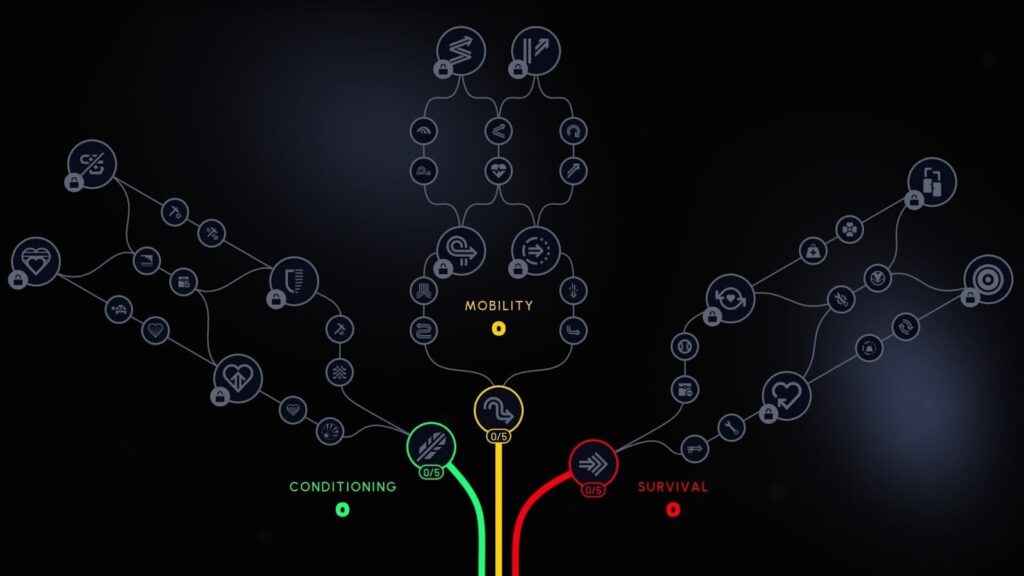
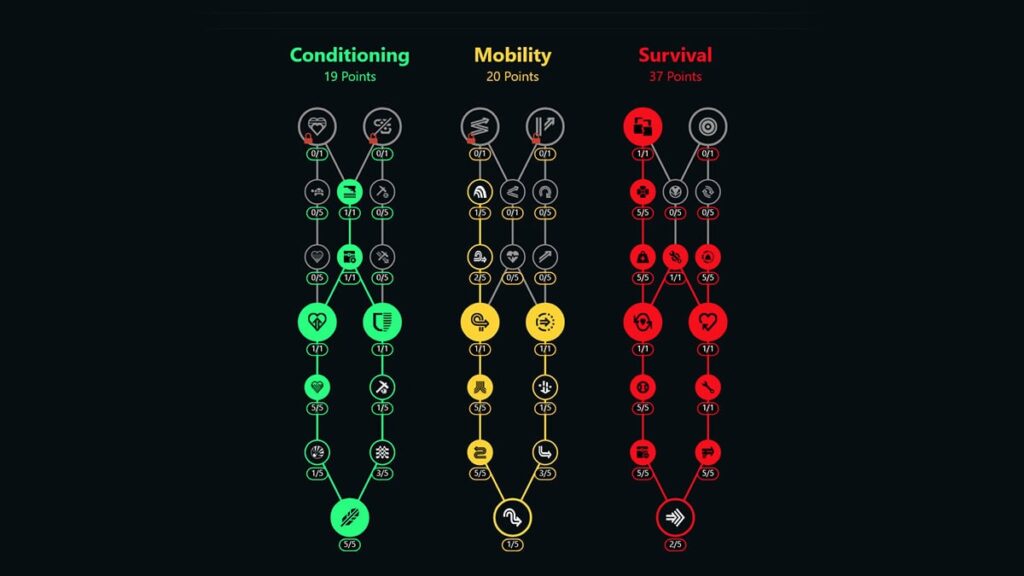
There are 45 unique skills spread across three distinct branches, with most skills offering five upgrade levels. The choices you make are significant because the total skill points available force meaningful decisions about your Raider’s identity and role.
How Skill Tree Progression Works In ARC Raiders
Progression in ARC Raiders rewards players who survive and extract successfully. You earn skill points through leveling up, with 75 points available through standard progression. An additional 5 bonus points can be earned based on currency accumulated during expeditions, bringing the maximum to 80 points.
This limited point pool means you cannot unlock everything. The system intentionally forces specialization, requiring players to commit to specific playstyles rather than becoming generalists. Early choices shape your Raider’s capabilities for many hours of gameplay, making it essential to understand what each skill branch offers before spending points.
Skill progression is designed around long-term planning. Rushing to unlock flashy-sounding skills often leaves Raiders with inefficient builds that struggle in actual raid scenarios. The most successful players identify their preferred playstyle early and build toward it systematically.
Can You Respec Or Reset Skill Trees In ARC Raiders?
Yes, ARC Raiders now allows skill tree resets, though the system comes with meaningful costs that encourage thoughtful initial planning.
The Cold Snap update introduced a direct reset option accessible through the Raider menu under Skill Tree. Clicking the Reset Skill Tree button allows you to reclaim all invested points, but this costs 2,000 coins per skill level. A fully invested skill tree requires approximately 152,000 coins to reset completely.
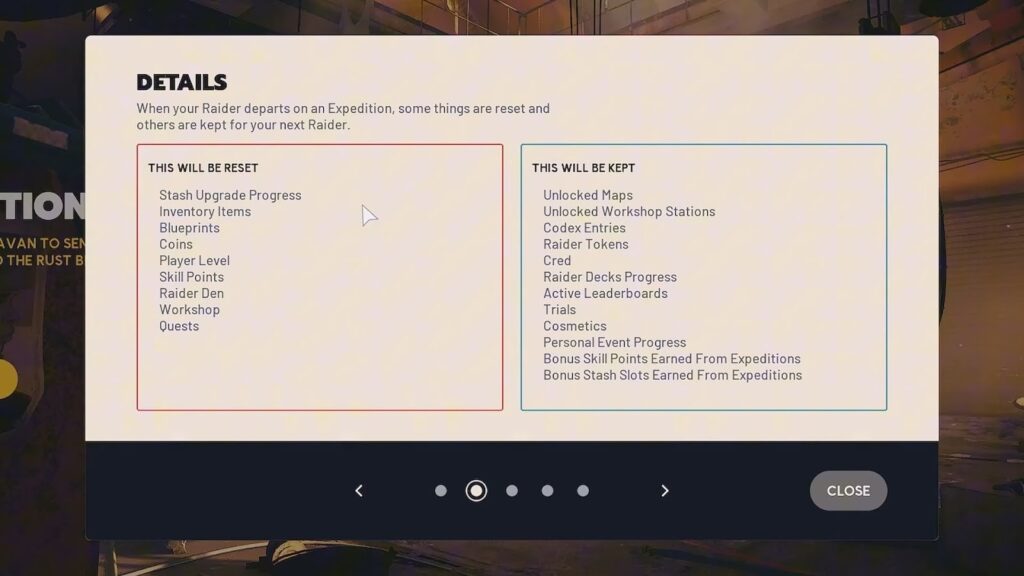
An alternative reset method exists through the Expedition system. At level 20, players unlock Expeditions, which function as a prestige mechanic. Completing all five stages and sending your Raider beyond the Rust Belt triggers a full progression reset, including skill points. This wipes your levels, coins, inventory, and quest progress while preserving cosmetic unlocks and certain currencies.
For players planning an Expedition reset, saving coins rather than paying for a skill respec makes practical sense since the full wipe accomplishes the same goal. New players should focus on building correctly the first time rather than relying on expensive resets.
How Skill Trees Affect Gameplay And Survival
Every skill point spent directly influences moment-to-moment decisions during raids. The right build turns dangerous situations into manageable ones, while poor investments create vulnerabilities that punish you repeatedly.
Consider escaping an ARC patrol. A Raider with maxed Marathon Runner and Youthful Lungs can sprint further and recover faster, creating distance when needed. A Raider without these investments runs out of stamina mid-chase and gets caught.
During firefights, skills like Used to the Weight reduce the movement penalty from shields, allowing faster repositioning while maintaining protection. Without this investment, heavily armored Raiders become slow targets.
Resource management also ties directly to skill choices. In-Round Crafting lets you create bandages and ammunition during raids, extending how long you can stay topside. Raiders lacking this skill must extract earlier or take greater risks while wounded and low on supplies.

ARC Raiders Skill Trees Overview
Before diving into specific skills, understanding how ARC Raiders compares to other extraction shooters helps frame what the skill system is designed to accomplish.
ARC Raiders prioritizes approachability, cooperation, and structured progression. The game is designed for players who enjoy teamwork and learning through play rather than punishing trial-and-error. Skill trees reflect this philosophy by rewarding consistent improvement over hardcore grinding.
| Category | ARC Raiders Skill Trees |
| Progression Type | Long-term character development |
| Skill Unlock Method | XP and progression milestones |
| Skill Focus | Survival, mobility, combat efficiency |
| Role Impact | Supports squad roles and playstyles |
| Risk Factor | Poor builds reduce extraction success |
| Respec Options | Available for coins (2,000 per level) |
| Learning Curve | Moderate, rewards planning |
| Total Skills | 45 unique skills across 3 branches |
| Maximum Points | 75-80 depending on expedition bonuses |
Core Skill Tree Categories In ARC Raiders
ARC Raiders organizes skills into three distinct branches, each serving different aspects of Raider effectiveness. Understanding what each branch offers helps you allocate points strategically.
Mobility Branch
- Sprint efficiency and stamina consumption
- Climbing and vaulting speed
- Dodge roll effectiveness
- Traversal across vertical terrain
- Core skills: Marathon Runner, Youthful Lungs, Nimble Climber, Vaults on Vaults on Vaults
Conditioning Branch
- Stamina capacity and recovery
- Weight management and carry capacity
- Resistance to environmental hazards
- Fall damage reduction
- Core skills: Used to the Weight, Loaded Arms, Proficient Pryer, Broad Shoulders
Survival Branch
- Field crafting capabilities
- Looting speed and efficiency
- Stealth and noise reduction
- Inventory management
- Core skills: In-Round Crafting, Looter’s Instincts, Traveling Tinkerer
Most successful builds invest heavily in one primary branch while selecting essential skills from the others. The recommended baseline distribution for balanced effectiveness is approximately 35 points in Mobility, 22 in Conditioning, and 18 in Survival, though specific playstyles may shift these numbers significantly.
Beginner Skill Tree Strategy: What To Unlock First
New players often make costly mistakes by chasing impressive-sounding skills before establishing fundamentals. The following priority order helps beginners build Raiders that survive consistently from the start.
Prioritise Mobility And Stamina Efficiency First
Movement is survival in ARC Raiders. Maps like Stella Montis are massive, and low starting stamina cripples your ability to traverse effectively, escape danger, or reposition during fights.
Priority Skills:
- Marathon Runner – Reduces stamina consumption while moving, letting you sprint further between rest periods
- Youthful Lungs – Expands your maximum stamina pool, enabling longer chases and extended firefights
- Nimble Climber – Improves climbing speed, critical on vertical terrain
Invest at least 15-28 points into Mobility before branching elsewhere. The movement advantages compound with each skill, creating a Raider who simply moves better than competitors. Escaping a bad situation matters more than dealing slightly more damage while trapped in one.
Invest In Basic Survivability Before Damage
Raw damage output is less valuable than staying alive long enough to extract. Skills that reduce incoming damage or improve resilience keep you in raids longer, translating directly into more loot and experience.
Priority Skills:
- Used to the Weight – Reduces shield equipment’s movement penalty, essential since shields are mandatory protection
- Fight or Flight – Triggers automatic stamina regeneration at critical health, helping you escape deadly situations
Surviving one extra hit often matters more than killing enemies slightly faster. Early game resources are limited, and every failed extraction sets back your progression. Build for consistency before optimizing for aggression.
Unlock Utility Skills That Reduce Downtime
Downtime creates vulnerability. Every second spent healing, reloading, or interacting with containers is a second you are exposed to threats. Utility skills minimize these windows.
Priority Skills:
- In-Round Crafting – Arguably the best skill in the game, allowing you to craft bandages, ammunition, and equipment in the field without returning to base
- Proficient Pryer – Accelerates breaching locked containers that hold premium loot
- Looter’s Instincts – Speeds up container identification, reducing time spent vulnerable while looting
In-Round Crafting alone extends raid duration massively. Being able to craft medical supplies after a fight means you can continue raiding instead of extracting early due to low health.
Add Team-Oriented Skills If Playing Co-Op
Squad play changes skill priorities significantly. When running with a team, certain support-focused investments create more value than pure solo optimization.
Team-Focused Considerations:
- Coordinate builds with squadmates to avoid redundancy
- Designate roles such as point runner, support, or loot carrier
- Communication about who carries what skills prevents gaps in team capability
If your squad already has strong mobility-focused Raiders, investing more heavily in Survival or Conditioning creates complementary coverage. The best squads feature diverse builds that handle different situations rather than four identical Raiders competing for the same role.

Best ARC Raiders Skill Builds (By Playstyle)
These builds represent proven approaches that suit different playstyles and squad roles. Each focuses on survivability, consistency, and extraction success rather than raw damage output.
| Build Type | Primary Skill Focus | Strengths | Best For |
| Solo Survivor | Mobility, sustain | High escape success | Solo players |
| Squad Support | Team utility, survival | Team longevity | Co-op squads |
| Aggressive Raider | Combat efficiency | Faster engagements | Confident fighters |
| Loot Runner | Speed, economy | Quick progression | Fast extractors |
Solo Survivor Build (Best For Playing Alone)
Solo players have no backup. Every skill point must contribute to escaping bad situations and surviving long enough to extract with loot.
Core Philosophy: Speed, positioning, and self-sufficiency take priority over everything else.
Skill Focus:
- Marathon Runner (Max) – Extended sprint duration for escaping threats
- Youthful Lungs (Max) – Maximum stamina pool for sustained movement
- Nimble Climber – Quick vertical escapes when grounded routes are blocked
- In-Round Crafting – Self-sufficient healing and ammunition
- Used to the Weight – Maintain mobility while wearing protective gear
- Fight or Flight – Emergency stamina regeneration when critically wounded
Point Distribution: Heavy Mobility investment (35+), moderate Survival (18-20), minimal Conditioning focused on weight management.
Playstyle Notes: Avoid extended fights. Use superior mobility to disengage, heal, and re-engage on your terms. Extract earlier rather than push risky loot when playing solo.
Squad Support Build (Best For Team-Based Play)
Support builds prioritize overall squad success over personal statistics. Your value comes from keeping teammates alive and enabling their effectiveness.
Core Philosophy: Team survival matters more than individual performance.
Skill Focus:
- Broad Shoulders – Additional carry capacity helps transport squad loot
- In-Round Crafting – Create supplies for teammates who run low
- Traveling Tinkerer – Craft utility items like Raider Hatch Keys for team access
- Marathon Runner – Maintain ability to reach downed teammates quickly
- Used to the Weight – Stay mobile while carrying support equipment
Point Distribution: Balanced across all three branches, with emphasis on Survival utility skills.
Playstyle Notes: Stay close enough to support but not so close that a single threat wipes the entire squad. Carry extra medical supplies and call out when teammates need to fall back for healing.
Aggressive Raider Build (Best For Confident Fighters)
This build rewards players who engage threats directly rather than avoiding them. It performs best when supported by strong fundamentals or reliable squadmates.
Core Philosophy: Win fights faster while maintaining enough mobility to reposition.
Skill Focus:
- Effortless Roll – Reduced stamina cost for combat dodging
- Carry the Momentum – Free sprinting after dodge rolls for aggressive repositioning
- Used to the Weight – Combat mobility with full protective gear
- Loaded Arms – Reduced gun weight for faster weapon handling
- Slip and Slide – Enhanced sliding for aggressive gap closers
Point Distribution: Split between Mobility (28-30) and Conditioning (25+), minimal Survival investment.
Playstyle Notes: High risk, high reward. This build punishes mistakes harder than others. Maintain strong mechanical fundamentals and know when to disengage rather than committing to losing fights.
Loot Runner Build (Best For Fast Extractions)
Loot runners focus on efficiency and economic gain. The goal is maximum loot per raid with minimum time exposed to threats.
Core Philosophy: Speed equals safety. Less time topside means less exposure to danger.
Skill Focus:
- Marathon Runner (Max) – Sprint between loot locations faster
- Youthful Lungs (Max) – Extended movement capacity
- Vaults on Vaults on Vaults – Zero stamina vaulting for rapid traversal
- Looter’s Instincts – Faster container identification
- Proficient Pryer – Quick breaching of locked containers
- Broad Shoulders – Carry more loot per extraction
Point Distribution: Heavy Mobility (35+), focused Survival skills for looting efficiency, minimal combat investment.
Playstyle Notes: Learn map layouts and optimal loot routes. Avoid fights entirely when possible. Your goal is efficient extraction, not engagement. Extract with consistent moderate hauls rather than risking everything for one big score.
Common Skill Tree Mistakes To Avoid
New players frequently make these errors when building their Raiders. Avoiding them accelerates your progression significantly.
- Spreading points too thin across all branches – Trying to be good at everything results in being effective at nothing. Commit to a primary branch and select only essential skills from others.
- Ignoring Mobility early – Low stamina cripples new players on large maps. Invest 15-28 points in Mobility before branching significantly.
- Prioritizing damage over survivability – Dead Raiders extract nothing. Survival and escape capability provide more consistent value than combat bonuses.
- Skipping In-Round Crafting – This skill extends raid duration more than almost any other investment. Field crafting reduces dependence on pre-raid preparation.
- Building solo-focused skills for squad play – Team content benefits from complementary builds. Coordinate with squadmates to cover different capabilities.
- Chasing late-game skills before fundamentals – Skills like Vaults on Vaults on Vaults require 15+ points in their branch. Build the foundation before investing in advanced options.
- Spending coins on respec instead of equipment – Respec costs add up quickly (2,000 per level). Plan builds correctly from the start using community tools like ARCRaiders.build.
Final Tips For Smarter ARC Raiders Progression
Smart progression comes from understanding that ARC Raiders rewards patience and planning over rushing. These principles help you build more effective Raiders from day one.
Plan before spending points. Use community skill planners like ARCRaiders.build or arctracker.io to experiment with builds before committing in-game. Test different configurations until you find one that matches your playstyle.
Prioritize fundamentals over flash. Marathon Runner and Youthful Lungs provide value in every single raid. Situational skills have their place, but core stamina management benefits you constantly.
Learn from extractions, not just deaths. Pay attention to what skill investments would have helped in close calls. If you repeatedly run out of stamina while escaping, that tells you where to invest next.
Coordinate with regular squadmates. If you consistently play with the same group, discuss builds and cover different roles. A balanced squad handles more situations than four identical Raiders.
Accept that some runs will fail. No build guarantees success. Use failures to identify weaknesses and adjust accordingly. The best Raiders learn from every extraction, successful or not.Stay flexible as the game evolves. Balance updates may shift which skills provide the most value. Stay informed about patch changes and be willing to adapt your approach when things shift.
If you are still struggling after choosing the right skill tree, and skills within, then view our ARC Raiders hacks to give yourself a boost!
ARC Raiders Skill Trees FAQs
Are ARC Raiders skill trees permanent?
Skill investments are not fully permanent. You can reset your skill tree using in-game coins at a cost of 2,000 coins per skill level. A full reset for a maxed skill tree costs approximately 152,000 coins. Alternatively, completing an Expedition prestige reset wipes all progression including skills, providing a free but complete reset.
Can you reset your skill tree?
Yes. Navigate to Raider > Skill Tree and click the Reset Skill Tree button at the bottom of the screen. Confirm the coin cost and your points will be refunded for reallocation. This feature was added in the Cold Snap update.
Do skill trees matter for casual players?
Skill trees matter for all players, though casual players benefit most from straightforward builds focused on mobility and survival. Even a few hours invested with a well-planned build produces noticeably better results than random skill allocation. The difference between struggling and succeeding often comes down to fundamental skill choices.
What are the best skills for beginners?
Begin with Marathon Runner and Youthful Lungs from the Mobility branch to address stamina limitations. Add In-Round Crafting from Survival for field self-sufficiency. Include Used to the Weight from Conditioning once you start using shields regularly. This foundation supports any future specialization.
Do skill trees affect solo and co-op play differently?
Solo and co-op play benefit from different skill priorities. Solo players need maximum self-sufficiency through mobility and personal survival skills. Co-op players can specialize more heavily since squadmates cover gaps. Team-oriented skills like crafting support items provide little value solo but significant value in groups. Build according to how you actually play rather than theorycrafting for situations you rarely encounter.