




On this page 7 sections
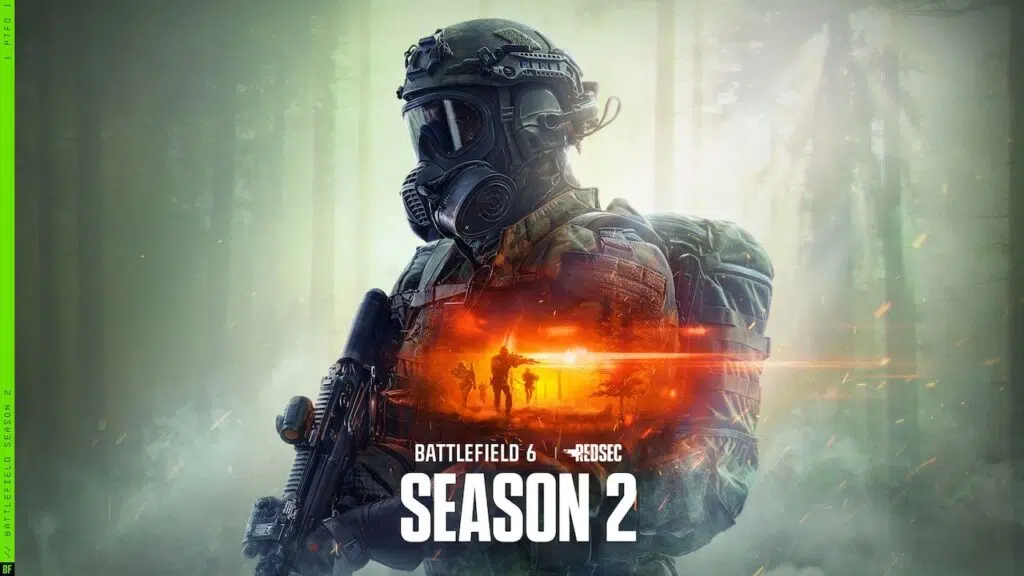
BF6 Season 2, titled Extreme Measures, ran from February 17 to May 12, 2026 and was the most structurally ambitious content drop Battlefield 6 had received up to then. It came in three phases, each adding new maps, weapons, vehicles, gadgets, and limited-time modes that shifted the way matches played out. Rather than releasing everything at once, DICE staggered the content into Phase 1 (Extreme Measures, February 17), Phase 2 (Nightfall, March 17), and Phase 3 (Hunter/Prey, April 14), giving the meta time to evolve between drops.
Where things stand now (checked 12 November 2026): Season 2 is over. It ended on May 12, 2026, when Season 3 began. Season 4, Pacific Front, followed on July 21, 2026, and the current season, Season 5, started on October 13, 2026 as the start of Battlefield 6’s second year. This page is a record of what Season 2 added. Its Battle Pass has closed and its limited-time modes ran only during their phases.
RedSec content ran alongside the full season, with dedicated battle royale events, loot economy adjustments, and a new Fort Lyndon point of interest that tied into the Phase 1 and Phase 2 limited-time modes. Season 2 built on Season 1’s core multiplayer while pulling RedSec closer into the overall Battlefield 6 ecosystem, so progress in one mode fed into the other.
The Season 2 BF6 Season Pass followed the same free-and-premium structure introduced at launch. All weapons, gadgets, and vehicles were on the free tier. Premium rewards focused on cosmetics, XP boosts, tier skips, and a dedicated Bonus Path for Battlefield Pro owners. Every piece of gameplay-affecting hardware was available without spending money. This page covers the full Season 2 roadmap, every new weapon and vehicle, the Battle Pass breakdown, and how the season changed competitive play.
The season also brought the deepest link between Battlefield 6 multiplayer and Battlefield RedSec up to that point. RedSec received dedicated events in each phase, new points of interest on the battle royale map, and economy adjustments that addressed community feedback from Season 1. The guaranteed minimum of 2 armor plates on death cut down on respawning defenseless after an early fight, and the Vehicle Keycard cooldown stopped the dominant squad from locking down every helicopter and armored vehicle for the whole match. These were targeted fixes that improved moment-to-moment play in RedSec without overhauling its core systems.
Battlefield 6 Season 2 Overview
The full BF6 Season 2 roadmap spanned roughly three months, from February 17 to May 12, 2026, with each phase adding distinct content to both core multiplayer and RedSec. The phased structure meant the game evolved throughout the season rather than getting a single content dump on day one. Use this table as a quick reference for when each phase arrived and what it included.
| Phase | Release Date | Key Content |
|---|---|---|
| Phase 1: Extreme Measures | February 17, 2026 | Contaminated map, GRT-CPS DMR, VCR-2 AR, M121 A2 LMG, AH-6 Little Bird / MH-350, 9K38 IGLA, HTI-MK2, VL-7 Psychoactive Smoke, VL-7 Strike mode, Gauntlet Altered State, BR Synthesis |
| Phase 2: Nightfall | March 17, 2026 | Hagental Base map, CZ3A1 SMG, VZ.61 sidearm, Dirt Bike (Hayes M1030-1 / TM/O 450), Nightfall mode, Gauntlet: Nightfall, Defense Testing Complex 3: Fort Lyndon POI |
| Phase 3: Hunter/Prey | April 14, 2026 | KAPOK 14” Machete, LTV (Light Tactical Vehicle), Operation Augur narrative event, Prestige Path |
| Ongoing / Season Long | February 17 - May 12, 2026 | Battle Pass progression, RedSec economy updates, Golmud Railway testing in Battlefield Labs, increased Career XP and Weapon XP rates |
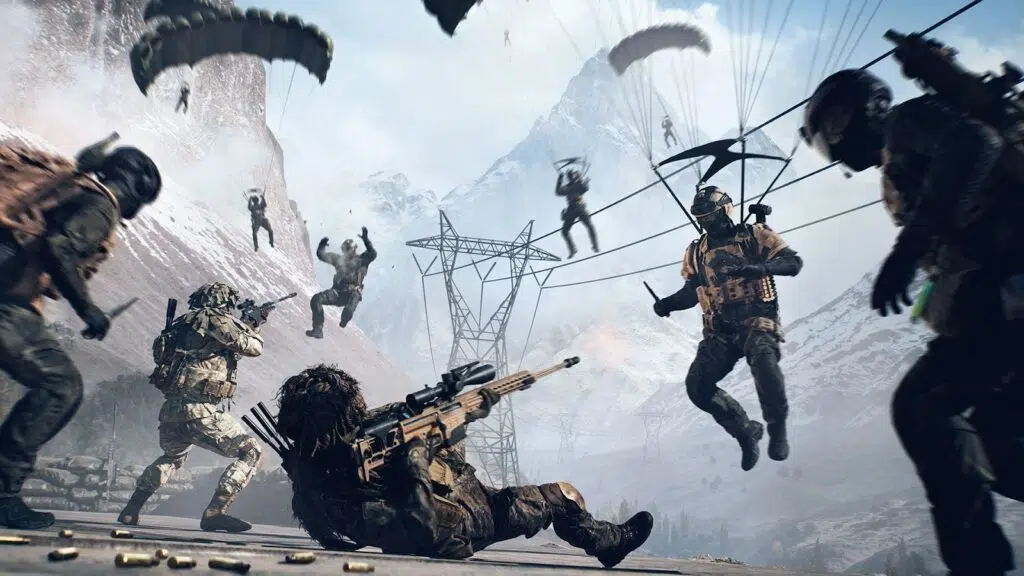
The season ended on May 12, 2026, when Season 3 launched. Battle Pass progress, on both free and premium tiers, had to be completed before that date. Limited-time modes rotated with their phases and were not guaranteed to return. Career XP and Weapon XP rates were raised across the whole season, so progression felt faster than during Season 1 whether or not you bought the premium pass.
The Ongoing/Season Long row in the table above is worth noting. Several changes ran across the entire season and affected every match, whatever the phase:
- Increased Career XP and Weapon XP rates: Progression was faster across the board than in Season 1. This applied to free and premium players equally and cut the time needed to unlock new weapons, gadgets, and Battle Pass tiers.
- RedSec economy adjustments: The guaranteed minimum of 2 armor plates on death and the Vehicle Keycard cooldown targeted the early eliminations and vehicle hoarding that frustrated players in Season 1.
- Golmud Railway Battlefield Labs testing: Community-driven development ran alongside the seasonal content drops. Players in Battlefield Labs could test the reworked map and give feedback during the season.
- Battle Pass progression: The multi-path progression system tracked across all three phases, with the Prestige Path and BF Pro Bonus Path unlocking in Phase 3 for players who had completed earlier tracks.
The Opening Phase: Extreme Measures
Phase 1, from February 17, 2026, set the tone for the season with Contaminated, a European mountainside map set at a German airbase. The environment tells its own story: a once-vibrant forest scarred by experimental weapons and heavy shelling. Contaminated supports all combat sizes and features land vehicles and helicopters, making it a versatile addition to the map rotation that accommodates infantry-focused squads and vehicle crews alike. The terrain blends open mountainside exposures with dense, damaged woodland and hardened airbase structures, giving players multiple engagement ranges within a single map.
What sets Contaminated apart from other BF6 maps is its environmental storytelling. Cratered hillsides, collapsed treelines, and abandoned research facilities create a map that feels like a location shaped by the season’s narrative rather than a generic battlefield. For vehicle players, the mountainside terrain gives helicopters vertical engagement opportunities while exposing ground vehicles to ambush from the wooded areas below. Infantry squads benefit from the airbase structures and interior spaces, where the VCR-2 and M121 A2 weapons introduced alongside the map perform at their best.
The VL-7 Psychoactive Smoke gadget defined Phase 1’s identity. This is not a standard smoke grenade. The VL-7 distorts the battlefield for anyone caught inside its radius, warping visual and audio perception in ways that force players to reposition or risk disorientation. The effect goes beyond blocking sightlines. Players inside the smoke experience altered environmental feedback that makes target acquisition unreliable, turning the gadget into an area-denial tool that punishes anyone who refuses to move. In practical terms, the VL-7 makes held positions untenable without requiring direct damage, which gives attacking teams a new tool for breaking defensive setups on objective-based modes.
VL-7 Strike, the Phase 1 limited-time mode, spread psychoactive smoke across the Contaminated map so that standard sightlines and positioning rules broke down. It forced short-range fights in areas that normally suit medium and long-range combat. Loadouts shifted with it, and shotguns, SMGs, and thermal optics became far more valuable than assault rifles and DMRs.
RedSec received two Phase 1 events built on the VL-7 mechanic. Gauntlet Altered State was a knockout elimination mode at Fort Lyndon where psychoactive smoke blanketed the arena and pushed fights into chaotic close quarters. Once your squad was down, you were out. The VL-7 layer made each round feel different from standard Gauntlet because you could not rely on normal sightlines or engagement distances.
BR Synthesis covered Fort Lyndon in VL-7 smoke and made players loot masks and filters to survive the distortion, adding a resource layer on top of the standard battle royale loop. Both modes rewarded aggressive play and punished long-range passive positioning. The mask-and-filter mechanic changed how you looted and when you rotated. If your filter ran out inside a contaminated zone, the visual and audio distortion made combat nearly impossible, so managing filters mattered as much as managing ammunition.
Nightfall: Tactical Darkness And Close-Quarters Pressure
Phase 2, from March 17, 2026, introduced Hagental Base, an underground Bavarian military facility designed for infantry-only combat. DICE drew direct inspiration from the franchise’s most iconic close-quarters maps, and the Metro/Locker influence is visible in Hagental’s tight corridors, layered vertical spaces, and limited flank routes. This is a map built for shotguns, SMGs, and controlled aggression where positioning within a room matters more than cross-map sightlines. There are no vehicles on Hagental Base. Every engagement is infantry-on-infantry, and the map’s confined geometry rewards players who understand corner clearing, pre-aiming, and grenade placement.
The standard Hagental Base variant, played under normal lighting conditions, is a strong map in its own right. The underground military facility offers multiple levels of engagement: main corridors that funnel large-scale infantry pushes, side tunnels that allow flanking squads to bypass choke points, and vertical shafts that create opportunities for above-and-below engagements. On objective-based modes, the map rewards coordinated squad pushes over solo plays because the corridor structure means one player holding a doorway can delay an entire team. Breaking through those defensive positions requires coordinated explosives, smoke, and timing.
The limited-time Nightfall variant stripped Hagental Base of reliable lighting, so darkness became a gameplay mechanic. Players needed night vision goggles (NVGs) to get around, but NVG users were blinded by direct light, which set up a cat-and-mouse game between players hiding in the dark and players using flashlights and muzzle flash to wash out NVGs. Thermal scopes were an alternative that cut through the darkness but limited peripheral awareness. Your optic mattered as much as your weapon, and switching between NVGs and naked vision mid-fight added a skill layer that standard Battlefield maps do not have.
The arrival of the CZ3A1 SMG in Phase 2 was not a coincidence. With a fire rate exceeding 1,000 RPM, the CZ3A1 is purpose-built for the kind of close-quarters combat that Hagental Base demands. Pairing it with the VZ.61 Skorpion sidearm gives you a fully automatic secondary option when the CZ3A1 runs dry mid-fight. Phase 2’s weapon additions were tuned for the map they launched alongside, and the Dirt Bike, added in the same phase, gave larger maps a fast-rotation vehicle to balance the infantry-only focus of Hagental Base.
RedSec’s Phase 2 event was Gauntlet: Nightfall, set inside Hagental Base with non-standard squad sizes and mandatory NVGs. It squeezed the darkness mechanic into an elimination format where audio discipline and close-range reflexes decided fights, and every flashlight or muzzle flash gave your position away.
Alongside Gauntlet: Nightfall, Phase 2 added Defense Testing Complex 3 to Fort Lyndon in RedSec. This point of interest added underground tunnels and loot chests to the battle royale map, giving squads a reason to push below ground for high-value loot at the cost of fighting in confined corridors. The underground layout matched the close-quarters feel of Hagental Base, so Phase 2 felt consistent across multiplayer and RedSec.
Hunter / Prey: High-Stakes Warfare
Phase 3, from April 14, 2026, closed the season with Operation Augur, a narrative-driven limited-time event that concluded Season 2’s story arc. Players fought for Pax Armata or NATO in objective-based scenarios built around the season’s themes of VL-7 experimentation and underground military operations. Operation Augur pulled in RedSec elements, mixing the battle royale’s survival pacing with Battlefield 6’s large-scale combat, and gave a story payoff to players who had followed all three phases.
Operation Augur was structured differently from the limited-time modes in Phases 1 and 2. Rather than changing an existing map and mode, it was a dedicated scenario with faction-specific objectives, scripted progression, and a story that advanced as the community completed objectives. Players who had played VL-7 Strike, Nightfall, and the RedSec events would recognize story elements and details that carried into it.
The Prestige Path unlocked in Phase 3 for players who had completed the main Battle Pass tracks, adding 10 more tiers of rewards. Battlefield Pro owners also got the BF Pro Bonus Path, a premium-only track with cosmetic rewards not available any other way.
Portal also received updates during Phase 3, and the Golmud Railway rework continued in Battlefield Labs testing. Golmud Railway is one of the most requested map reworks from the Battlefield community, and keeping it in Battlefield Labs through Season 2 showed DICE treating it as a long-term project rather than rushing it into the live game. Battlefield Labs players could give direct feedback on the rework during the season.
Hunter/Prey raised the demands on squad coordination. The LTV (Light Tactical Vehicle) arrived in Phase 3, giving squads a fast, lightly armored transport that changed rotation timing and mid-match mobility. The LTV fills a gap in the vehicle roster between unprotected jeeps and heavily armored APCs, providing practical squad transport without the target priority that comes with a tank or IFV. Combined with the KAPOK 14” Machete melee weapon and the meta shifts from Phases 1 and 2, the final weeks of Season 2, up to May 12, were the most layered stretch of the season.
RedSec was part of Phase 3 too. Operation Augur’s story connected multiplayer and battle royale events, so players who played both got the fuller picture. The raised Career XP and Weapon XP rates, active all season, kept Phase 3 rewards reachable for players who started late or took a break earlier on.
New Hardware Introduced In BF6 Season 2
Season 2 added a substantial amount of new equipment across its three phases. Every weapon, vehicle, and gadget listed below was on the free tier of the Season 2 Battle Pass. Premium purchases sped up progression but did not put any gameplay-affecting hardware behind a paywall. The additions span every engagement range and playstyle, from marksman rifles to fully automatic sidearms and dedicated anti-air launchers.
New Vehicles
Three new vehicles entered the rotation across the season, each filling a distinct role. Season 1 had left gaps in the vehicle roster, particularly scout helicopters and light transport, and Season 2 filled them. Each vehicle arrived in a different phase, so the vehicle meta shifted three times during the season.
- AH-6 Little Bird (NATO) / MH-350 (Pax Armata) - Phase 1: Scout helicopters designed for rapid insertion, close air support, and light anti-vehicle harassment. The Little Bird and MH-350 are faction-specific variants of the same vehicle class, offering high maneuverability and exposed crew positions that reward skilled pilots while keeping them vulnerable to anti-air fire. The 9K38 IGLA launcher, also introduced in Phase 1, directly counters these helicopters. The scout helicopter is a strong rotation and flanking tool on larger maps, particularly Contaminated, where the open mountainside terrain gives pilots room to maneuver.
- Dirt Bike - Hayes M1030-1 (NATO) / TM/O 450 (Pax Armata) - Phase 2: The fastest land vehicle in Battlefield 6. The Dirt Bike trades protection for raw speed, allowing solo players to reposition across the map faster than any other ground transport. It is a high-risk, high-reward vehicle that excels at flanking, flag captures in Conquest, and escaping engagements you cannot win. The Dirt Bike offers no armor and no passenger seats. You are fully exposed while riding, meaning any competent sniper or vehicle gunner can end your run instantly. The trade-off is speed that nothing else on the ground can match.
- LTV (Light Tactical Vehicle) - Phase 3: A squad transport that fills the gap between unarmored jeeps and fully armored APCs. The LTV carries multiple passengers, provides light protection from small-arms fire, and moves fast enough to serve as a mid-match rotation tool without painting you as a high-value target the way a tank does. For organized squads, the LTV changes how you plan rotations. You can move your full team across the map faster and safer than on foot, arriving at objectives with more health and more coordination than squads who hoofed it. In RedSec, the LTV provides a mid-tier vehicle option that is less powerful than a full APC but far more practical than running on foot through open terrain during late-circle rotations.
The Season 2 vehicle additions also affected RedSec. Scout helicopters and the Dirt Bike gave more mobility in the battle royale, where rotation speed matters in late circles. The Vehicle Keycard cooldown added in Season 2 stopped any single squad from hoarding vehicle spawns across the match, which spread vehicle access more evenly and rewarded smart use over grabbing everything early.
New Weapons And Equipment
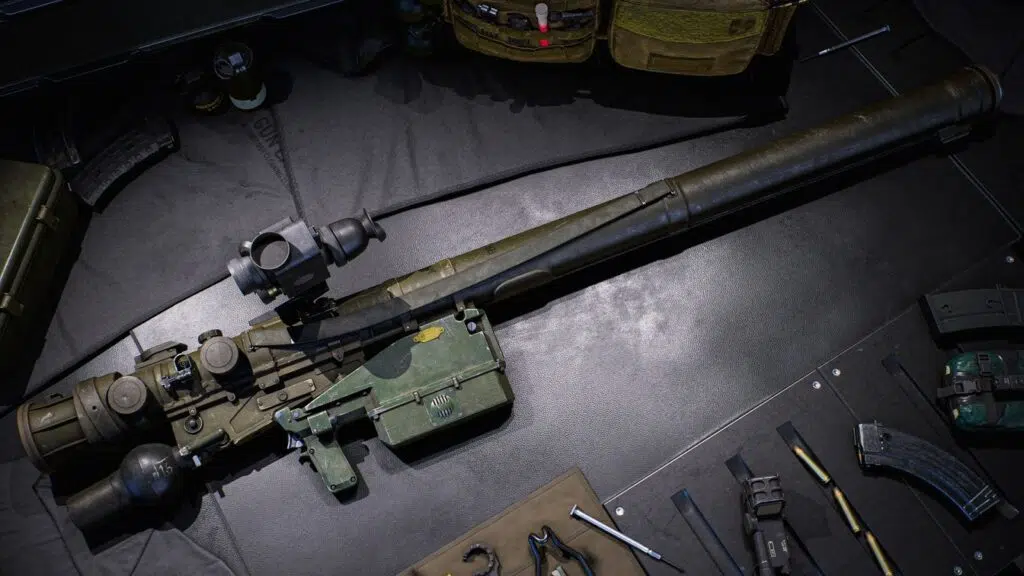
Season 2 introduced the weapons and gadgets below, expanding loadout options across every class. Each item was unlocked through the free tier of the Season 2 Battle Pass. The additions were paired with the season’s maps and modes, with close-quarters options arriving alongside Hagental Base and anti-air tools launching with the scout helicopters, so each phase felt like a coherent package.
| Item | Type | Phase | Key Characteristics |
|---|---|---|---|
| GRT-CPS | Designated Marksman Rifle | Phase 1 | Fast-firing DMR effective at mid-to-long range. Fills the gap between assault rifles and sniper rifles for players who want consistent ranged damage without bolt-action pacing. |
| VCR-2 | Assault Rifle | Phase 1 | Bullpup design with a high fire rate optimized for close-quarters engagements. Competitive with SMGs inside buildings while maintaining enough accuracy for mid-range fights. |
| M121 A2 | Light Machine Gun | Phase 1 | High rate of fire with a deep magazine designed for suppression and squad-wiping. Rewards players who pre-aim lanes and hold positions rather than pushing aggressively. |
| 9K38 IGLA | Air-Defense Launcher (Gadget) | Phase 1 | Lock-on anti-air launcher that reacquires targets mid-flight. Directly counters the new scout helicopters and forces pilots to respect infantry anti-air coverage. |
| HTI-MK2 | Recon Gadget | Phase 1 | Spots and destroys electronic and explosive enemy gadgets. Essential for clearing mined areas, disabling sensor equipment, and supporting pushes into fortified positions. |
| CZ3A1 | Submachine Gun | Phase 2 | A returning fan favorite from Battlefield 4 with a fire rate exceeding 1,000 RPM. Dominates close-quarters engagements on maps like Hagental Base but burns through ammunition rapidly. |
| VZ.61 | Sidearm | Phase 2 | The Skorpion machine pistol. A fully automatic sidearm that functions as a secondary SMG for emergency close-range encounters. High fire rate with limited effective range. |
| KAPOK 14” Machete | Melee Weapon | Phase 3 | A dedicated melee option with extended reach compared to standard knife attacks. Purely situational but effective in the tight corridors of Hagental Base and confined spaces. |
The VL-7 Psychoactive Smoke also debuted as a gadget in Phase 1, though its main impact was in the limited-time modes rather than standard multiplayer loadouts. In core modes, the VL-7 functions as an area-denial tool that forces enemies out of positions without dealing direct damage, similar to incendiary grenades but with a disorientation effect rather than damage over time. Its practical value in standard matches depends on the map and mode. On Contaminated and other outdoor maps, the VL-7 is effective for breaking defensive positions. On Hagental Base, the already-limited sightlines reduce its utility compared to traditional explosives and incendiaries.
The Phase 1 weapons fill clear roles in the existing arsenal. The GRT-CPS gives players a fast-firing alternative to bolt-action sniper rifles, allowing you to maintain pressure at range without committing to the slow follow-up shots that traditional sniping demands. The VCR-2 blurs the line between assault rifles and SMGs, making it a strong pick on maps with both indoor and outdoor engagement zones. The M121 A2 rewards disciplined positioning with a deep magazine and high rate of fire that can suppress or eliminate entire squads who push into its killzone. Together these three weapons meant Phase 1 did not favor a single playstyle. Aggressive pushers, positional defenders, and ranged marksmen all got new tools.
The 9K38 IGLA deserves specific attention because of how it reshapes the vehicle meta. Unlike standard lock-on launchers, the IGLA reacquires targets mid-flight, meaning pilots cannot simply pop flares and resume their attack run. The missile continues tracking after countermeasures expire. This forces helicopter pilots to commit to extended evasive action, which limits their ability to provide sustained close air support. On maps with scout helicopters, having at least one IGLA-equipped player in your squad becomes a genuine tactical consideration.
The HTI-MK2 fills a utility role that was largely absent in Season 1. The ability to spot and destroy electronic and explosive gadgets means you can clear claymores, disable motion sensors, and strip fortified positions of their passive defenses before your squad pushes in. On objective-based modes like Rush and Breakthrough, the HTI-MK2 accelerates through defensive positions that would otherwise require explosive spam or slow flanking routes. If you would rather see traps before you walk into them, the Battlefield 6 wallhack flags mines and claymores through walls. In RedSec, the HTI-MK2 serves a similar purpose by revealing enemy gadgets in high-value loot areas, allowing your squad to push confidently into trapped buildings and underground spaces like the new Defense Testing Complex 3.
Phase 2 weapons are specifically calibrated for close-quarters combat. The CZ3A1 is a returning weapon that Battlefield 4 veterans will recognize immediately. Its fire rate exceeding 1,000 RPM makes it the fastest-killing SMG in close range, but that same fire rate means you burn through a full magazine in seconds. Trigger discipline and reload timing are essential. The VZ.61 Skorpion machine pistol fills the sidearm slot with a fully automatic backup weapon, giving you a viable secondary option in situations where reloading your primary would get you killed. On Hagental Base, where fights happen at arm’s length, having a fully automatic sidearm is the difference between winning a trade and losing it.
The Phase 3 KAPOK 14” Machete is a niche addition that appeals to a specific type of player. Melee weapons in Battlefield are situational by nature, and the Machete does not change that fundamental reality. What it does provide is extended melee reach compared to the default knife, which makes it marginally more viable in the tight corridors of Hagental Base and in surprise encounters where a weapon swap would take too long. It is not a primary combat tool, but for players who enjoy melee challenges and close-quarters aggression, it adds a new option to the loadout.
BF6 Season 2 Pass: Free vs Premium Breakdown
The Season 2 BF6 Season Pass used a tiered structure that kept gameplay content separate from cosmetic rewards. The standard Battle Pass cost 1,100 BFC (about $10), while Battlefield Pro, a one-season bundle rather than a monthly subscription, cost $24.99 and included the Battle Pass along with extra benefits. All weapons, vehicles, and gadgets were unlocked through the free tier, so you never needed to spend money to get new hardware.
| Feature | Free Pass | Premium BF6 Pass |
|---|---|---|
| Weapons and Gadgets | All new weapons and gadgets included | All new weapons and gadgets included (same as free) |
| Cosmetic Skins | Limited selection (~39 free items total) | Full selection (~71 premium rewards plus free items) |
| Bonus Path | Not available | BF Pro Bonus Path (exclusive cosmetics) |
| XP Boosts | Not included | 15% XP boost (BF Pro), tier skip tokens |
| Event Rewards | Standard event participation rewards | Premium event rewards and exclusive items |
| BFC Earnable | Portion of 1,100 BFC across pass | Full 1,100 BFC earnable across entire pass |
| Portal Hosting | Standard server capacity | 100-player Portal server hosting (BF Pro) |
The Battle Pass was organized into several tracks rather than a single linear path. The Recruit Path (5 tiers) was an onboarding track for new and returning players. The 4 Main Paths (22 tiers each) held the bulk of the rewards. The Ultimate Path (7 tiers) gave advanced rewards for players close to finishing the pass. The Prestige Path (10 tiers) unlocked in Phase 3 for players who had completed the main tracks. Battlefield Pro owners also had the BF Pro Bonus Path, with cosmetics not available in any other track.
Battlefield Pro ($24.99) bundled the standard Battle Pass with 25 tier skips, a 15% XP boost for the season, 100-player Portal hosting, and the BF Pro Bonus Path. The tier skips gave immediate access to early-tier rewards, which helped players unlock the new weapons sooner.
For players who completed the premium pass, the 1,100 BFC earnable across it covered the standard Battle Pass for Season 3: spend 1,100 BFC on the pass, earn 1,100 BFC back across the tiers, and use it on the next one.
The free tier was generous by live-service standards. About 39 items were free, including every weapon, gadget, and vehicle added in the season. The premium tier added about 71 more rewards, most of them operator skins, weapon camos, vehicle paints, charms, and other cosmetics.
The 100-player Portal hosting in Battlefield Pro mattered mainly to community organizers. Standard accounts could host Portal servers, but at lower player counts, so clans and creators who ran full-size custom matches needed BF Pro to do it during Season 2. For most individual players it made no difference.
Here is what each spending tier provided in Season 2:
- $0 (Free): All weapons, vehicles, gadgets, and about 39 cosmetic and progression items. Full access to all maps and modes. No XP boosts or tier skips.
- $10 (Standard Battle Pass, 1,100 BFC): Everything in the free tier plus about 71 premium rewards and 1,100 BFC earnable across the full pass.
- $24.99 (Battlefield Pro): Everything in the standard pass plus 25 tier skips, a 15% XP boost, 100-player Portal hosting, and the BF Pro Bonus Path.
How BF6 Season 2 Changed Competitive Play
Season 2’s new maps, weapons, gadgets, and limited-time mechanics shifted the meta three times, once per phase, and pushed competitive squads to rethink loadouts and roles.
- Environmental pressure from Extreme Measures: The VL-7 Psychoactive Smoke added an area-denial tool with a disorientation layer, which made pushing through smoke far more dangerous than with standard smokes. Teams that used it to force enemies off power positions gained an edge, and on Contaminated it turned open-field engagements into unpredictable close-range fights.
- Less long-range play in Nightfall: Hagental Base and its Nightfall variant removed the long-range engagements that define most Battlefield maps. DMR and sniper setups struggled there, the CZ3A1 rewarded SMG and shotgun loadouts, and thermal scopes gave players a way to see through the darkness.
- Squad coordination in Hunter/Prey: Operation Augur and the LTV rewarded squads that coordinated rotations and vehicle use. Arriving at an objective together, at full health, in a vehicle that gave cover on dismount was a real advantage. In RedSec, the Vehicle Keycard cooldown kept a single squad from monopolizing high-value vehicles.
- Vehicle meta shifts: The AH-6 Little Bird and MH-350 scout helicopters added a new air threat. The 9K38 IGLA countered them directly, but carrying one meant giving up another gadget, so squads had to decide whether a dedicated anti-air player was worth it on each map.
- Thermal optics value: Thermal scopes cut through both psychoactive smoke and Nightfall darkness, which made them useful across Phase 1 and Phase 2 content despite their narrow view and slower close-range target acquisition.
- Loadout flexibility: Taken together, Season 2 punished one-size-fits-all loadouts. Contaminated demanded versatility across ranges, Hagental Base demanded close-quarters setups, and VL-7 Strike and Nightfall demanded specific optics and gadgets.
A common squad setup during Season 2 split those jobs between players:
- Anti-air specialist: Carried the 9K38 IGLA to deny scout helicopters. Essential on vehicle-heavy maps, optional on infantry-only maps like Hagental Base.
- Gadget disruption: Ran the HTI-MK2 to clear mined positions and disable sensors before pushes, which sped up captures in Rush and Breakthrough.
- Area denial: Deployed VL-7 Psychoactive Smoke to force enemies off power positions, most effective on Contaminated.
- Thermal optics user: Used thermal scopes to see through psychoactive smoke and Nightfall darkness.
Was The Season 2 Battle Pass Worth It?
Looking back, the value of the Season 2 pass depended on how much you played between February 17 and May 12, 2026. The free tier covered every gameplay item, so premium was a cosmetic and convenience upgrade, not a competitive one. Regular players who finished the premium pass earned its 1,100 BFC back for the Season 3 pass, and Battlefield Pro’s tier skips and XP boost helped them get there faster. Casual players who only cared about weapons and gadgets lost nothing by staying on the free tier.
Looking Back At BF6 Season 2
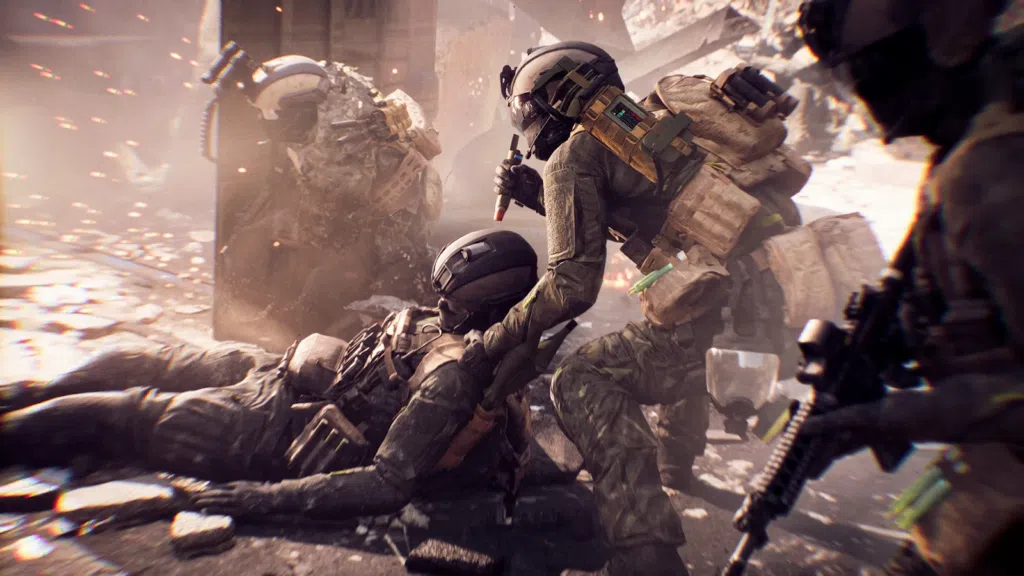
BF6 Season 2 was an expansion of Battlefield 6’s foundation, not an overhaul. Its three phases each had a clear identity: Extreme Measures focused on environmental chaos and area denial, Nightfall on darkness and close-quarters combat, and Hunter/Prey on the story finale and squad-level coordination. Spacing the content across February, March, and April gave each drop time to settle into the meta before the next arrived.
The hardware was the season’s strongest element. The scout helicopters, Dirt Bike, and LTV filled gaps that Season 1 had left in the vehicle roster, the weapons covered several engagement ranges, and the 9K38 IGLA and HTI-MK2 added new counterplay. All of it was free.
Nightfall was the boldest experiment. Darkness on Hagental Base changed how Battlefield plays, and audio became a main source of information. ESP is drawn on top of the game, so player and vehicle ESP for Battlefield 6 stays readable even in the dark.
The RedSec side of the season was deeper than in Season 1. Shared events, Fort Lyndon updates, and Gauntlet variants tied the battle royale and multiplayer together, and the minimum of 2 armor plates on death and the Vehicle Keycard cooldown fixed two common complaints. If you are new to the battle royale, start with our RedSec beginners guide.
Season 2 is now history. Season 3 started on May 12, 2026, Season 4 on July 21, 2026, and the current season, Season 5, on October 13, 2026. Check EA’s official Battlefield news for what is live right now.
For more Battlefield 6 reading, our Battlefield 6 player count tracker shows how busy lobbies are, the Battlefield Companion app guide explains how to manage loadouts away from your PC, and our BF6 crossplay explainer covers mixed PC and console lobbies.
Sources: EA’s Season 2 roadmap, Season 3 roadmap and Season 5 preview, checked 12 November 2026.
Battlefield 6 Season 2 FAQs
When did BF6 Season 2 start?
BF6 Season 2 (Extreme Measures) launched on February 17, 2026. Phase 1 added the Contaminated map, three weapons (GRT-CPS, VCR-2, M121 A2), the 9K38 IGLA and HTI-MK2 gadgets, the VL-7 Psychoactive Smoke, and the AH-6 Little Bird / MH-350 scout helicopters. Phase 2 (Nightfall) followed on March 17 with Hagental Base, the CZ3A1 SMG, the VZ.61 sidearm, and the Dirt Bike. Phase 3 (Hunter/Prey) arrived on April 14 with Operation Augur, the LTV, and the KAPOK 14” Machete.
When did BF6 Season 2 end?
BF6 Season 2 ended on May 12, 2026, when Season 3 launched. Battle Pass progress had to be completed by then. The limited-time modes, including VL-7 Strike, Nightfall, and Operation Augur, ran only during their phases.
What season is Battlefield 6 on now?
As of 12 November 2026, Battlefield 6 and RedSec are in Season 5, which started on October 13, 2026. Season 3 ran from May 12, 2026 and Season 4 (Pacific Front) from July 21, 2026.
How much was the Battlefield 6 Season 2 pass?
The standard Season 2 Battle Pass cost 1,100 BFC, about $10. Battlefield Pro cost $24.99 and added 25 tier skips, a 15% XP boost, 100-player Portal hosting, and the BF Pro Bonus Path. Completing the premium pass earned back 1,100 BFC, enough for the next season’s standard pass.
Did the Season 2 pass include weapons?
Yes. Every new weapon and gadget in Season 2 was on the free tier: the GRT-CPS DMR, VCR-2 assault rifle, M121 A2 LMG, CZ3A1 SMG, VZ.61 sidearm, KAPOK 14” Machete, 9K38 IGLA, HTI-MK2, and VL-7 Psychoactive Smoke. The premium pass only added cosmetics, XP boosts, tier skips, and the BF Pro Bonus Path.
Could you earn Season 2 pass rewards for free?
Yes. The free tier had about 39 items, covering all weapons, gadgets, vehicles, and some cosmetics. The roughly 71 premium rewards needed the paid pass or Battlefield Pro, but none of them affected gameplay.
What was included in the Season 2 Battle Pass?
A Recruit Path (5 tiers), 4 Main Paths (22 tiers each), an Ultimate Path (7 tiers), and a Prestige Path (10 tiers) that unlocked in Phase 3. Battlefield Pro owners also got the BF Pro Bonus Path. Premium players had about 71 extra rewards and 1,100 earnable BFC.
What were the Season 2 RedSec events?
RedSec events were limited-time modes and updates for Battlefield RedSec, the free-to-play battle royale that runs alongside Battlefield 6. In Season 2 they were Gauntlet Altered State and BR Synthesis in Phase 1, Gauntlet: Nightfall in Phase 2, and the Operation Augur story in Phase 3. Season-long changes included Defense Testing Complex 3 at Fort Lyndon (an underground point of interest with tunnels and loot chests), a guaranteed minimum of 2 armor plates on death, and the Vehicle Keycard cooldown.
Did BF6 Season 2 add new vehicles?
Yes, three. Phase 1 added the AH-6 Little Bird (NATO) / MH-350 (Pax Armata) scout helicopters, Phase 2 added the Dirt Bike (Hayes M1030-1 / TM/O 450), and Phase 3 added the LTV (Light Tactical Vehicle). Golmud Railway was also reworked in Battlefield Labs testing during the season.
Was Nightfall a permanent mode?
No. Nightfall was a limited-time mode in Phase 2, which began on March 17, 2026. It ran on Hagental Base with darkness that required NVGs or thermal optics, and it ended with its phase.
Want the edge in Battlefield 6?
Undetected Battlefield 6 cheats with aimbot, ESP and 24/7 support.